Paint sheen refers to how much light reflects off a painted surface — essentially its the level of shine or lack of it. The higher the sheen, the more reflective and glossy the surface appears.
Choosing the right paint sheen is important not only from a design perspective, it plays a role in the durability and ease of cleaning. Depending on the sheen level it can also hide or highlight surface imperfections.
Paint Sheens Are Not The Same Across All Paint Brands
Sheen levels can vary between manufacturers. One brand’s eggshell might look closer to another’s satin. There are no industry rules that have to be adhered to. To make it more confusing some brands use alternate names like low luster or velvet. Ask your painter or paint store for guidance on how each brand defines its sheens.
Common Sheen Levels
Most paint sheens are available for interior or exterior use. Here are some of the options in order of the paint starting with no sheen and ending with the highest sheen paint called gloss.
- flat/ultra, zero reflection, hides imperfections, ideal for ceilings
- matte/velvet: soft, low reflection, elegant look, good for imperfect walls
- eggshell/low luster, most popular for walls, a balance between reflection and durability and ease of cleaning, can show some imperfections
- satin/pearl: durable, medium reflection with a soft glow, most popular for trim work and doors, can be used for cabinets, can show some surface imperfections
- semi-gloss: higher reflection and shine easy to clean, highlights flaws, used for trim, doors and cabinets
- Gloss/high gloss: extremely reflective, dramatic, bold finish for doors, cabinets or statement pieces, every flaw will show if surfaces are not perfect
Flat Sheens
A true flat paint has no visible sheen and therefore no reflection. It’s great at concealing surface imperfections. Painters will often seek out a “dead flat” paint for ceiling application to avoid any reflection from lights. Some brand’s paint that is labeled “flat” is not a true flat and has a minimal amount of sheen to it. Flat sheen paints are forgiving when it comes to touch-ups. They can easily mark, are not very washable and tend to hold onto stains.

Matte Sheen
Matte paints have a touch of sheen and a velvety finish favoured by interior decorators. It can help to conceal imperfections on less than perfect walls.
Advances in paint technology have allowed washable matte paints into the market, but they still won’t hold up as well as comparable quality eggshell sheen paint.
Eggshell Sheen
Eggshell or low lustre is a step up in sheen from matte, but lower than satin or pearl. From straight viewing there’s not much difference visually between matte and eggshell, but from even a slight angle you can see the higher reflection of an eggshell surface.
Eggshell sheen is the go-to for interior walls, it offers the best balance between appearance and practicality for cleaning. There are some very durable eggshell sheen paints on the market today.
Satin Or Pearl Sheen
Satin or pearl finishes are ideal for trim, doors and mouldings. They highlight architectural details with a soft glow, providing contrast next to matte or eggshell walls. Not the best option for walls, it will highlight a lot of imperfections, but are easier to clean.
Semi-gloss Sheen
Semi-gloss has a fair bit of reflection, good resistance to dirt and scuff marks and is easy to clean. Imperfections will be strongly highlighted. It’s diminished in popularity for trim work and doors in favour of lower, but still durable finishes like satin and pearl.
High Gloss Sheen
High gloss is extremely reflective. It’s used for statement piece furniture and occasionally cabinets and doors where a mirror like finish is desired. Surfaces must be flawlessly prepared or every imperfection will show. The paint needs to be sprayed or every brush mark and roller pass will be noticeable.
Best Paint Sheens For Each Interior Space Of Your Home
Interior sheen choices ultimately come down to a blend of personal preference and room use.
- Interior Walls – eggshell is the most versatile choice offering some durability and not too reflective, with matte being another good contender
- Kitchen And Bathrooms – eggshell is also the preferred choice as it’s not too reflective and there are eggshell paints formulated for ease of washing and high humidity areas
- Trims And Doors – satin or pearl sheens provide durability and a subtle contrast from the walls without too much reflection, semi-gloss is an option for those who prefer a more reflective sheen and very easy cleaning
- Ceilings – flat is the best choice to minimize glare and light reflection
Lower sheen options are available for walls today thanks to modern technology that has created washable formulas like Benjamin Moore Ulti-matte and Aura Bath & Spa.
Examples Of Paint Sheens Used In Home Interiors
Eggshell Walls with Semi-Gloss Trim
This room features eggshell walls paired with semi-gloss trim. The soft wall finish contrasts beautifully with the higher sheen on the trim, highlighting details and adding depth through reflected light.

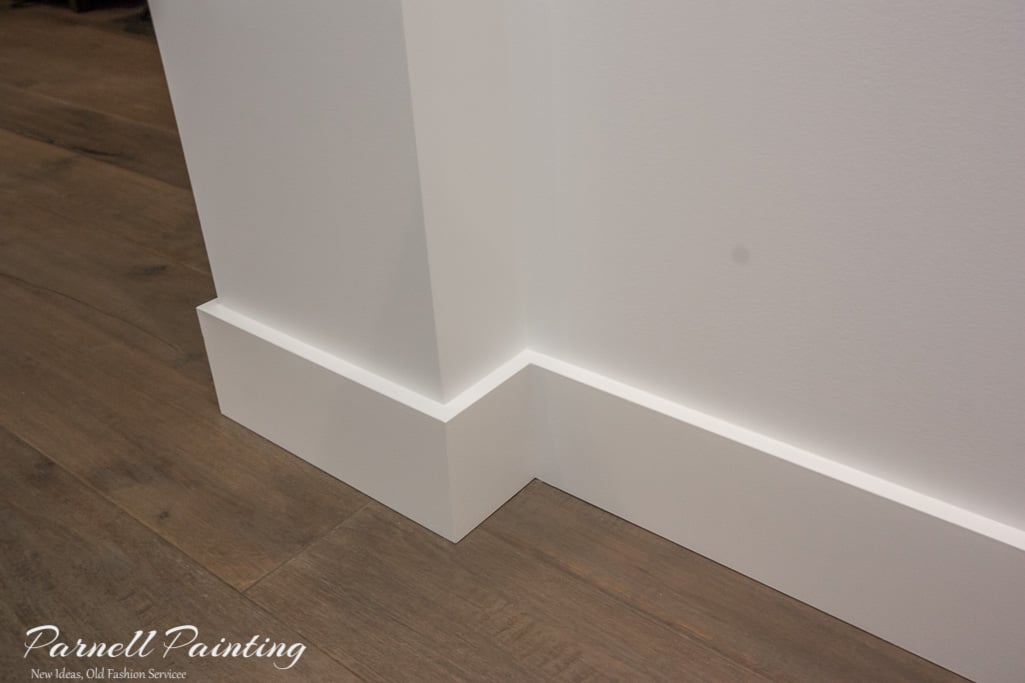
All White Interior With Matte Walls with Satin Baseboards
This all white interior has matte paint on the walls, a subtle distinction is made between the two surfaces by using satin sheen on the baseboards and trim. The satin sheen also provides the trim with extra durability.
Flat Walls with Pearl Trim and Doors
A flat wall sheen combined with pearl sheen on trim and doors creates a refined, low-reflection look that complements the modern and and minimalist decor of this home’s interior.

Eggshell Walls with Pearl Trim
In this ranch-style home, eggshell walls are paired with pearl sheen trim to achieve durability without the high reflection of semi-gloss. It gives the home a balanced, soft finish that highlights the trim without drawing too much attention.

Best Paint Sheens for Exterior Surfaces
When choosing the sheen for exterior painting it is important to think about the practical considerations and not just the aesthetics.
- Flat paints – hides surface flaws but attract more dirt. The lack of reflection offers a softer, more natural appearance on textured surfaces like stucco or wood siding. Likewise, some owners do not like how higher sheen paints highlight the texture of James Hardie board siding.
- Satin paints – better at repelling water and dirt, easier to clean, makes a great choice for exterior trim work and doors and for siding that gets dirt or debris blown or splashed up on it
- Semi-gloss – excellent at repelling water and dirt, adds durability, very easy to clean, suitable for exterior trim work and doors
All things being equal, higher sheen paints have properties that are more favourable for exterior surfaces. If you desire the look of a lower sheen paint there are options available, but make sure it’s a premium paint that is specifically formulated for durability, dirt and stain resistance. Regardless of sheen you want an exterior paint with UV protectants and mildew and mold resistance.
Examples Of Sheens Used On Exterior Surfaces
Flat Sheen On Exterior Siding
For this home, the decorator chose a flat sheen paint for the siding to achieve a soft, non-reflective look that shows the paint colour more accurately, similar to how it appears on a swatch. A premium flat paint was used, but regardless it will be more prone to scuffs and dirt retention than a comparable quality paint in a higher sheen. Looking down the siding you can see there is no visible reflection.

Satin Sheen On Exterior Siding
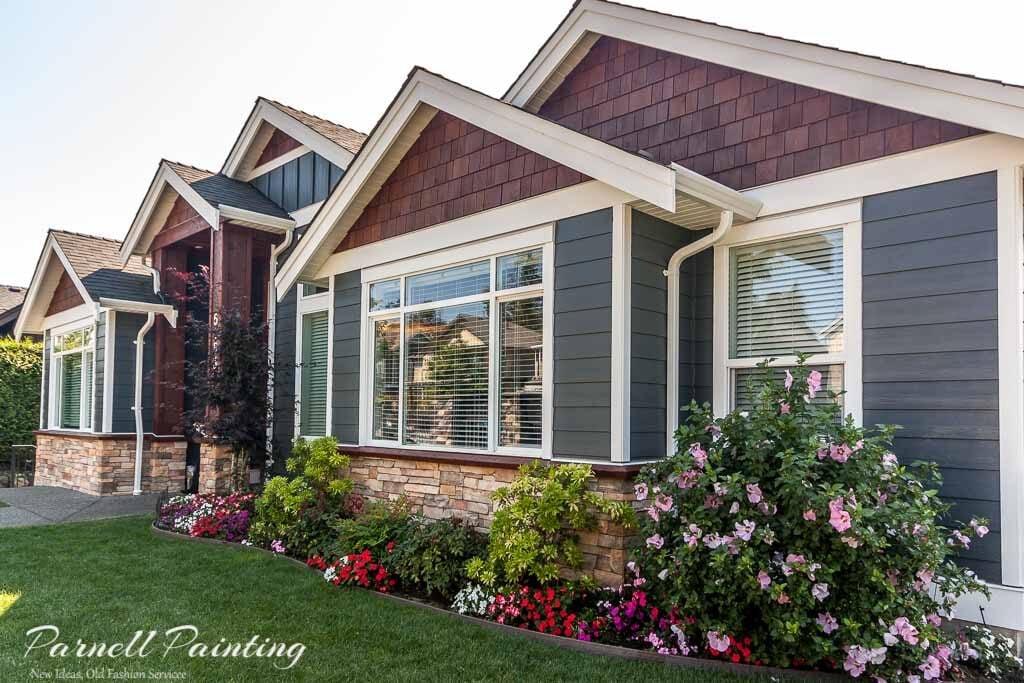
This home is painted in a dark blue satin sheen. The benefit of this high-quality satin sheen paint is the excellent dirt and stain resistance, making it ideal for durability and cleaning. The trade-off is that its reflection emphasizes surface texture of the James Hardie siding which some homeowners may prefer to avoid.

Satin Sheen Can Vary by Paint Brand
The brown siding on this home has a noticeably glossy reflection, even when viewed straight on. This shows how paint sheen levels differ between manufacturers. Although labeled as satin, this product has a higher sheen closer to semi-gloss, creating a slightly “plastic” appearance.

Satin Sheen with Stained Trim for Balanced Contrast
This modular home features James Hardie board siding painted in a satin sheen and wood trim finished with a flatter stain. The satin paint adds a subtle touch of sheen and durability, while the low-sheen trim provides a natural, softer contrast. Note that satin finishes can vary by brand—in this case, the satin paint has a lower sheen than typical, offering a more understated look.


Satin Sheen on Exterior Doors for Durability and Contrast
Exterior doors are often painted in a satin sheen to create a bold, durable finish that stands out against lower-sheen siding. A high-quality satin paint provides excellent scuff resistance, easy cleaning, and long-lasting protection—perfect for frequently used doors exposed to the elements.
Flat Sheen for a Soft Look Free Of Reflection
The Hardie board siding and trim of this house were painted with a flat sheen paint. The builder specified flat sheen to avoid unwanted glare that could detract from the home’s architectural details.

Flat or Stained Finishes for Textured Surfaces
Many homeowners prefer a low-sheen or stained finish on textured materials like cedar shingles. Higher-sheen paints can highlight uneven textures, which some find unappealing. A flat stain gives a natural, subdued look that enhances the wood’s character while minimizing glare and visual distraction.

Satin Sheen On A Modern White House Exterior
This modern-style farmhouse exterior is painted entirely white in a satin sheen paint. It’s a large house and if it was a dark colour the satin sheen could be overwhelmingly glossy. The satin sheen is not as noticeable in a light colour or on the vertical board-and-batten siding compared to horizontal siding. It’s a good sheen choice to repel dirt and moisture, which will help keep this white exterior looking bright and crisp.

How Sheen Affects Paint Colours
Sheen influences how we see paint colours. Higher sheen paints reflect more light, making colours appear more saturated. Flat or matte finishes show colour truer to a paint chip swatch because there’s no reflection to distort it. However, at any given time the lighting conditions and angle of viewing can distort how we see a colour.
Using different sheens on walls and trim can create subtle contrast and highlight architectural details—even when the same colour is used.
The same colour has been used throughout the room below in matte sheen for the walls and satin sheen for the trim work. Take note of the reflection on the door trim and how it influences the appearance of the colour.

Why Darker Paint Colours Often Look Better in Lower Sheens
Dark colours require a lot more tint and pigment which alters the paint formulation and increases the sheen. The sheen also appears more noticeable on darker colours because light reflections stand out against the deeper tones.
This is why deep colours are often painted in flat or matte finishes as was done for the dark chocolate wall in this bedroom, to retain a softer look with less reflection.

This vibrant purple bedroom below was painted with a matte sheen paint. In a higher sheen paint it may have looked garish with too much reflection.

Summary Of Sheens And Paint Properties
These paint sheen guidelines provide a general overview, but there are exceptions where paint quality affects performance regardless of sheen. It’s easy to assume higher sheen always means better durability and easier cleaning, but that’s not always true. A premium-grade matte paint formulated for washability and durability can outperform a low-quality eggshell.
Some paints have additives that improve their scuff resistance, adhesion, flow and leveling and mold and mildew protection. Always research and choose the right paint type and sheen for your specific surface, conditions and desired finish.

Fresh Paint Initially Has a Higher Sheen
When paint is first applied, the sheen is at its highest and may appear glossier than expected. Acrylic and latex paints continue curing for two to four weeks, dulling slightly as solvents and other components evaporate. Once fully cured, the paint reaches its true, final sheen level.
All Paint Sheens Dull Over Time
Over time, all paints experience a gradual loss of sheen—it’s an inevitable part of their lifespan. After a few years, finishes appear duller and flatter due to UV exposure breaking down finish on exteriors and interior rooms with intense sunlight. Exposure to weather, pollutants and abrasion from cleaning all accelerate the process causing the paint film to wear down.
How to Minimize Sheen Loss
Sheen loss can be reduced by using high-quality paint that resists UV damage and surface wear. Lower-grade products dull more quickly, especially outdoors. Proper surface prep, correct film thickness, and skilled application all help maintain a paint’s original luster longer.
How Sheen Causes Touch-Ups To Stand Out
As paint dulls, touch-ups can appear shinier than surrounding areas. During the curing phase, they may blend better, but once paint has fully cured, touch-ups rarely match. Repainting a full wall or section from corner to corner gives a uniform finish.
Full Coverage Is Required For Proper Sheen
Most paints need two full coats to achieve even colour and sheen. A single coat can leave thin or uneven coverage, reducing durability and gloss. For example if you’ve chosen satin or eggshell for its washable finish, you may not be getting the full potential of the paint with a one coat application.
We’re a local Nanaimo painting company with over 20 years of experience. As a husband-and-wife team, we take pride in providing personal service and exceptional craftsmanship.
Contact Parnell Painting today by email or phone to schedule a free, no-obligation estimate. We’ll help you bring fresh colour and lasting beauty to your home.